
Key Takeaways
- A new qualitative study published in the American Journal of Hospice and Palliative Medicine surveyed oncology providers about their readiness to incorporate psychedelic-assisted therapy into cancer care.
- Clinicians expressed cautious optimism but identified concrete barriers: time demands, unclear reimbursement pathways, and uncertainty about which team members should deliver the therapy.
- Most providers wanted more training before referring patients, even as psilocybin research for cancer-related distress continues to advance through clinical trials.
- Psilocybin remains a Schedule I controlled substance under federal law; no FDA-approved psilocybin therapy exists for oncology patients as of this writing.
Research on psilocybin for cancer-related psychological distress has generated significant attention over the past decade. Trials at Johns Hopkins, NYU, and other institutions have reported promising signals for reducing anxiety and depression in patients facing life-threatening diagnoses. Yet one question has received far less scrutiny: What do the oncologists, nurses, and palliative care specialists who actually treat these patients think about psychedelic-assisted therapy? A new study published in the American Journal of Hospice and Palliative Medicine offers some answers—and they’re more complicated than headlines might suggest.
What Did This Study Actually Examine?
Researchers conducted qualitative interviews with oncology clinicians to understand their attitudes, knowledge gaps, and perceived barriers to psychedelic-assisted therapy. Rather than surveying hundreds of providers with checkboxes, the team used in-depth conversations to surface the nuances that quantitative surveys often miss. This approach yields richer data about why providers hold certain views, not just what those views are.
The study comes at a particular moment in the regulatory timeline. Psilocybin received FDA breakthrough therapy designation for treatment-resistant depression in 2018 and for major depressive disorder in 2019. However, FDA advisory committees have raised concerns about trial methodology, and no psilocybin product has received approval for any indication. For oncology specifically, several trials have examined psilocybin for cancer-related distress, but these remain investigational. Oregon’s regulated psilocybin services program, operational since 2023, does not constitute medical treatment or FDA approval.

What Barriers Did Oncology Providers Identify?
Clinicians raised several practical concerns that rarely appear in media coverage of psychedelic research. Time emerged as a consistent theme. Psilocybin-assisted therapy, as studied in clinical trials, typically involves multiple preparatory sessions, an extended dosing session lasting six hours or more, and follow-up integration appointments. Oncology practices already operate under significant time pressure. Providers questioned how this model could fit into existing workflows.
Reimbursement uncertainty presented another barrier. No insurance coverage pathway exists for psilocybin-assisted therapy because the treatment lacks FDA approval. Even if approval eventually comes, providers noted that establishing billing codes and payer policies takes years. Cancer care is already expensive; adding an uninsured service creates access questions that clinicians found uncomfortable.
Scope-of-practice concerns surfaced repeatedly. Who, exactly, would deliver psychedelic-assisted therapy in an oncology setting? Oncologists generally lack training in psychotherapy. Licensed therapists may lack oncology-specific knowledge. The hybrid professional described in research protocols—someone fluent in both psychedelic facilitation and cancer care—doesn’t exist in most healthcare systems. This workforce gap isn’t merely theoretical; it reflects a real obstacle to implementation.
How Did Providers View the Evidence Base?
Oncology clinicians expressed cautious interest in the research findings while noting limitations. Several providers acknowledged the NYU and Johns Hopkins trials showing reductions in anxiety and depression scores following psilocybin administration. At the same time, they pointed to small sample sizes and questioned whether results would generalize to diverse patient populations.
This skepticism isn’t cynicism—it’s clinical reasoning. Oncologists evaluate treatment options against established standards of evidence. Phase II trials with 50 participants, however encouraging, don’t carry the same weight as Phase III data from randomized controlled trials with hundreds or thousands of subjects. Providers wanted to see larger, more rigorous studies before feeling comfortable recommending psychedelic-assisted therapy to patients.

Training emerged as a clear need. Most providers reported minimal formal education about psychedelics during medical school or residency. The knowledge gap isn’t surprising—psychedelic research largely halted after 1970 and only resumed at scale in the 2000s. Continuing medical education hasn’t caught up. Providers said they would need structured training before feeling confident discussing psychedelic-assisted therapy with patients, let alone integrating it into care plans.
What Does “Integration” Mean in This Context?
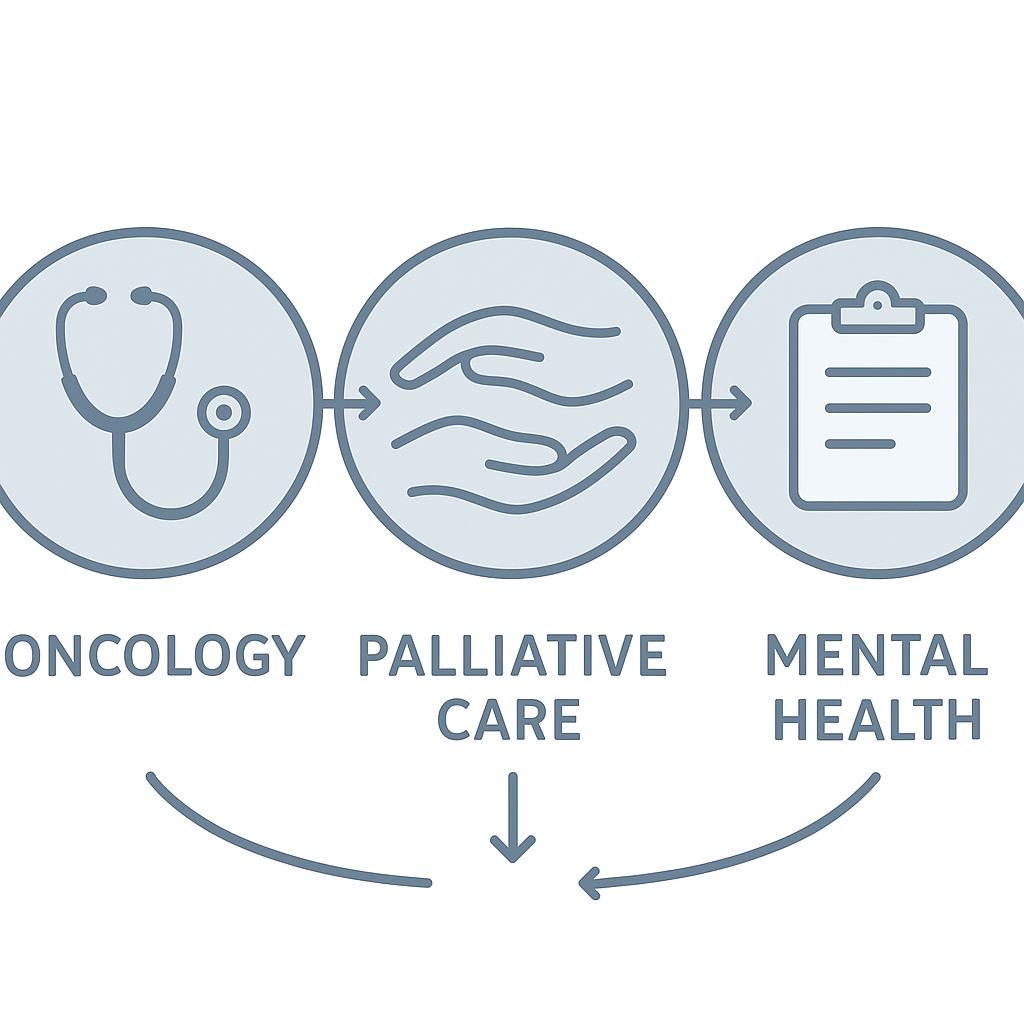
Researchers asked clinicians how psychedelic-assisted therapy might fit into existing cancer care pathways. The answers revealed how much infrastructure would need development. Integration isn’t simply adding another treatment option; it requires coordination across multiple specialties, clear protocols for patient selection and monitoring, and systems for managing potential adverse effects.
Providers noted that palliative care teams might be better positioned than oncology practices to deliver psychedelic-assisted therapy. Palliative specialists already address psychological and existential distress as core responsibilities. Their workflows accommodate longer appointments. However, not all cancer patients receive palliative care, and access varies significantly by geography and healthcare system.
Some clinicians raised questions about patient safety screening. Psilocybin trials typically exclude individuals with personal or family histories of psychotic disorders. Implementing similar screening in routine oncology practice would require additional intake procedures and possibly consultation with psychiatry. These aren’t insurmountable obstacles, but they represent real implementation challenges that research protocols don’t always address.
Follow our coverage of psilocybin research and policy for ongoing reporting on clinical trial developments and regulatory changes.
How Does This Fit the Broader Research Landscape?
This qualitative study adds important context to ongoing clinical trials. Understanding provider attitudes matters because even if psilocybin eventually receives FDA approval for some indication, uptake will depend on whether clinicians feel prepared to use it. Regulatory approval is necessary but not sufficient for clinical adoption.
Several trials specifically examining psilocybin for cancer-related distress are listed on ClinicalTrials.gov. These include studies focused on anxiety, depression, and existential distress in patients with advanced-stage diagnoses. Results from these trials will likely influence whether and how oncology teams consider psychedelic-assisted therapy in the future.
The provider perspective research also highlights a gap in psychedelic science more broadly. Much attention focuses on patient outcomes—symptom scores, quality of life measures, adverse events. Less research examines the healthcare systems that would deliver these treatments and the professionals who staff them. Implementation science, as this field is called, matters enormously for translating research findings into clinical practice.
What Remains Unknown?
This study captured perspectives at a specific moment. Provider attitudes may shift as more research publishes, as training programs develop, and as regulatory pathways clarify. The clinicians interviewed worked in particular healthcare settings; providers in community oncology practices or resource-limited settings might face different barriers.
Importantly, this was a qualitative study with a relatively small sample. Researchers aimed for depth rather than representativeness. Larger surveys could quantify how widespread these attitudes are across the oncology workforce. For now, this study offers a window into concerns that deserve attention as the field advances.

Frequently Asked Questions
Is psilocybin-assisted therapy currently available for cancer patients?
No. Psilocybin remains a Schedule I controlled substance under federal law, and no FDA-approved psilocybin therapy exists for any indication, including cancer-related distress. Oregon’s regulated services program operates outside the medical system and does not constitute medical treatment. Clinical trials offer the primary legal pathway for patients to access psilocybin in research settings.
What did oncology providers say they need before considering psychedelic-assisted therapy?
Clinicians consistently identified training as a priority. Most reported receiving little to no education about psychedelics during their medical training. Providers also wanted clearer evidence from larger trials, established reimbursement pathways, and guidance on which team members would be responsible for delivering the therapy.
Why does provider attitude matter for treatment adoption?
Regulatory approval doesn’t guarantee clinical uptake. Healthcare providers serve as gatekeepers who decide which treatments to recommend and deliver. If clinicians lack confidence in the evidence, feel unprepared to administer a therapy, or face practical barriers to implementation, adoption will remain limited regardless of regulatory status.
How does this study relate to ongoing psilocybin clinical trials?
While most psilocybin research focuses on patient outcomes, this study examines the providers who would deliver such treatments. Implementation science research like this helps identify barriers and facilitators that affect whether promising trial results translate into real-world clinical practice.
What barriers did providers identify beyond training?
Time constraints emerged as a significant concern—psilocybin-assisted therapy requires multiple lengthy sessions that don’t fit standard oncology workflows. Reimbursement uncertainty also troubled providers, as did questions about scope of practice and which professionals should deliver the therapy.
Does this study suggest oncology providers oppose psychedelic-assisted therapy?
Not exactly. Providers expressed cautious interest rather than opposition. They recognized potential benefits shown in research while identifying practical barriers that would need resolution before implementation. Their stance reflects standard clinical caution toward emerging treatments without established protocols.
Read more from the lab notebook for continued reporting on psilocybin research developments.
This article is for educational and informational purposes only and is not medical, legal, or cultivation advice. Psilocybin is a Schedule I controlled substance under federal law; decriminalization measures do not authorize sale, and this content does not encourage illegal activity.
These statements have not been evaluated by the Food and Drug Administration. This content is not intended to diagnose, treat, cure, or prevent any disease.
About the Author
Nick Delesandro — Writer — Mycology & Psychedelic Policy · 20+ years experience
Nick writes about mushroom science and the evolving law and research around psilocybin, reporting from primary sources — clinical trials, agency records, and legislation. His background is in cannabis and horticulture; his mushroom coverage is source-driven reporting, not laboratory or cultivation expertise.