
The mushroom industry is changing fast.
Farms use new technology to grow and protect mushrooms.
Eco-friendly ideas help the planet and save money.
Vertical Farming—Smarter Space Use
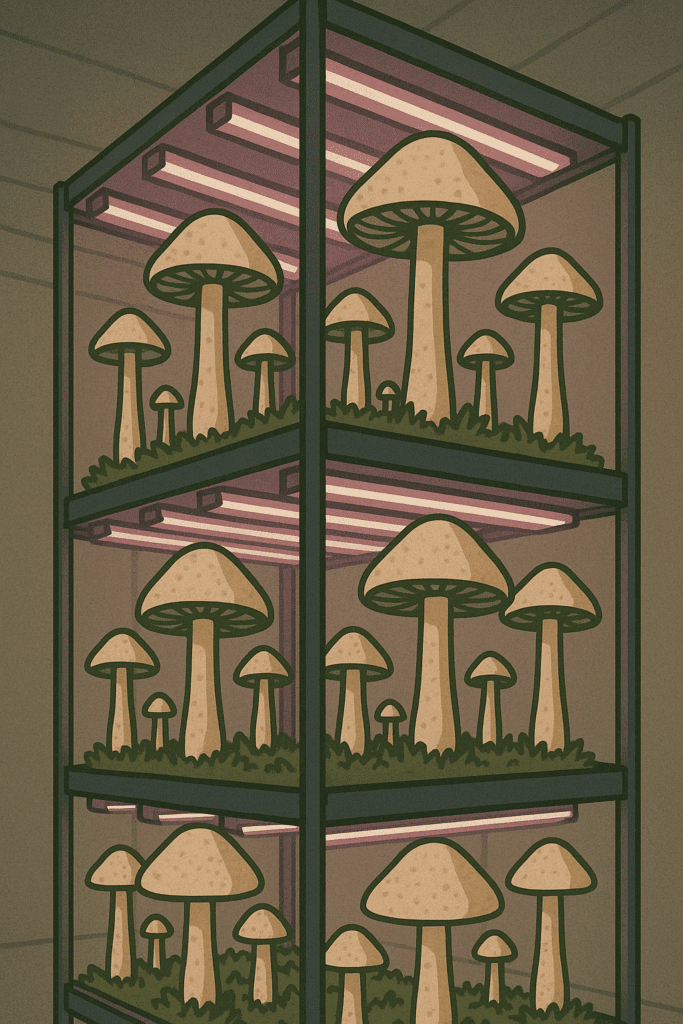
Vertical farms stack mushrooms in tall rows.
LED lights and smart controls save energy.
Workers use big bins and sky-high shelves.
Results:
- More mushrooms per square foot.
- Less water and land needed.
- Easy temperature and light control.
- Year-round, indoor growing.
Composting—Cutting Waste, Feeding Mushrooms
Most mushrooms grow from compost.
Old leaves, straw, and farm scraps feed new crops.
Compost cuts waste and boosts farm health.
Clean soil leads to better mushrooms and less pollution.

Farm Automation—Faster, Safer, More Profitable
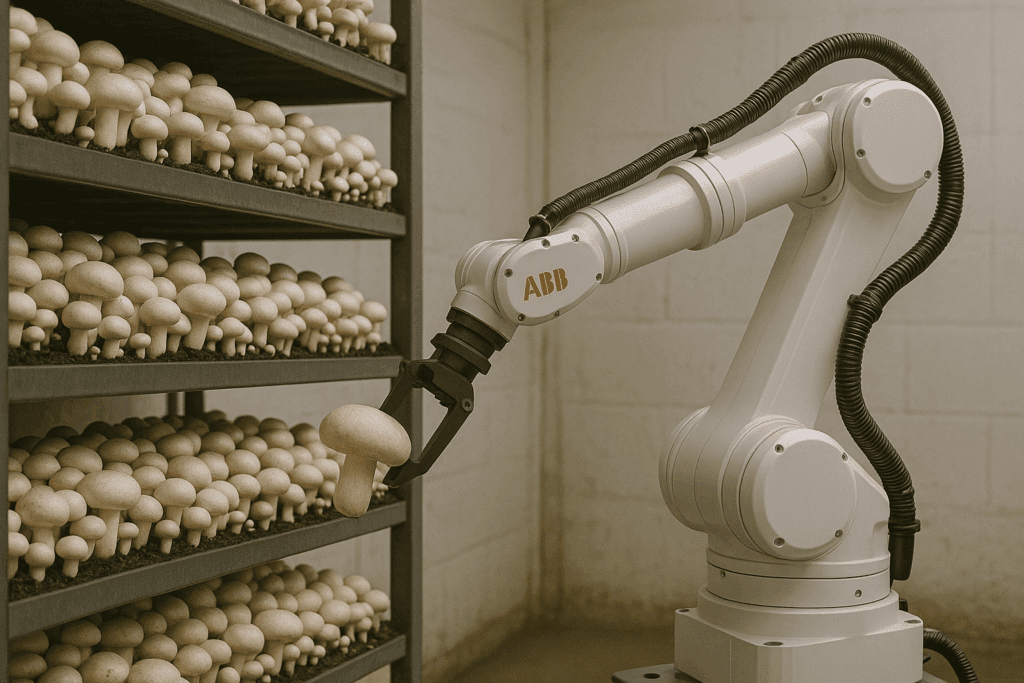
Robots pick mushrooms at top speed.
Sensors check humidity and temperature.
Platforms use AI to spot pests.
Automation helps farms:
Going Green—Organic And Sustainable Changes
Many farms choose organic methods.
Covered bins prevent pollution.
Circular systems recycle waste into new crops.
Firms use less or no plastic in packaging.
Organic farming costs more but leads to cleaner mushrooms and markets.
Biotech Startups Pushing Boundaries
New companies use fungi for health, food, and biotech.
| Startup | Focus | Key Innovation |
|---|---|---|
| Terrapeutics | Drug discovery, cancer | Soil microbe screening |
| Apoena Biotech | Soil/fungal products, agri | Biofertilizer |
| Mara Bio | Fungal food proteins | Upcycled food waste |
| MycoWorks | Sustainable biomaterials | Mycelium leather |
| Ecovative | Green packaging, textiles | Mushroom packaging |
These startups lead in:
Food And Wellness Innovations
New products hit the shelves each week.
- Mushroom coffee and energy drinks.
- Ready-to-cook meal kits.
- Immune support capsules and powders.
- Vegan bacon and mycelium meats.
Retailers and restaurants offer mushroom foods for health.
Big Farming Challenges
Farms face:
- Rising costs for supplies and labor.
- Shortage of skilled workers.
- Ban on peat and search for new substrates.
- Need for green, plastic-free packaging.
- Pest and disease management.
Innovation helps with each challenge.
Future Trends
- AI and data analytics drive farming choices.
- Farms recycle everything—soil, water, energy.
- Urban mushroom farms appear in shipping containers.
- Smart robots replace manual labor.
Mushrooms support:
Table—Main Innovation Areas In 2025
| Innovation | Benefit |
|---|---|
| Vertical farms | Maximize space, save water |
| Compost systems | Cut waste, boost crops |
| Farm automation | Reduce labor needs |
| Biotech startups | New foods, medicines |
| Green packaging | Less pollution |
FAQ
What is vertical farming?
Stacking crops in rows for more food in less space.
Why use compost?
It feeds mushrooms and keeps farms eco-friendly.
Are robots common on farms?
Yes. Robots harvest, track, and protect crops.
Who leads in mushroom biotech?
Terrapeutics, Mara Bio, and MycoWorks are top names.
Can mushroom farming improve sustainability?
Yes. Farms clean up waste, save energy, and help the Earth.
Expand Your Stash
Looking for Clones? Kingkongclones.com offers green, efficient genetics for modern farms.
Want Personal Flower? Packtrapper.com provides clean, tested mushrooms from the best farms.
Need Bulk Flower? Trapgods.io checks supplies for eco-friendly production.
Need Breeder Seeds? NeptuneSeedBank.com supports growers seeking new, sustainable strains.
References
- Mushroom Market Trends in 2025
- Driving Innovations in Mushroom Farming
- Top 8 Challenges Facing the Mushroom Industry in 2025
- Mushroom Cultivation Technology: Decade Long Trends
- 25 Mushroom Companies to Watch
- Top 5 Biotech Startups Pushing Bioprospecting
- Top 10 Fungi Startups Transforming Materials, Food, Medicine
- Best Mushroom Startups & Innovations 2025
- Mushroom Innovation Expanding
- Hydroponic Container Farms and Mushroom Farms