Key Takeaways
- A 2025 review in Trends in Pharmacological Sciences examines how biological sex influences serotonergic signaling and psychedelic response.
- Differences in 5-HT2A receptor density and hormonal modulation may partly explain variable outcomes in psilocybin clinical trials.
- FDA guidance now requires researchers to analyze results by sex as a biological variable—changing how future trials report data.
- Historical underrepresentation of women in psychedelic research leaves significant gaps in understanding sex-specific pharmacology.
- Psilocybin remains a Schedule I substance federally; this research is about understanding the compound, not accessing it.
When psilocybin clinical trials report their outcomes—depression scores dropping, anxiety measures shifting—the numbers usually arrive as averages. Buried beneath those averages, however, may be meaningful differences between how male and female participants respond. A new review published in Trends in Pharmacological Sciences argues that sex-sensitive serotonergic signaling deserves far more attention than it currently receives in psychedelic pharmacology research.
I’ve covered psilocybin research and policy for this site by following clinical trial registrations, FDA records, and peer-reviewed publications. My background is in cannabis and horticulture journalism, not laboratory pharmacology—so what follows is reported from the sources, not claimed as personal expertise. The review itself raises questions that matter for anyone tracking where this research is headed.
What Does “Sex-Sensitive Serotonergic Signaling” Actually Mean?
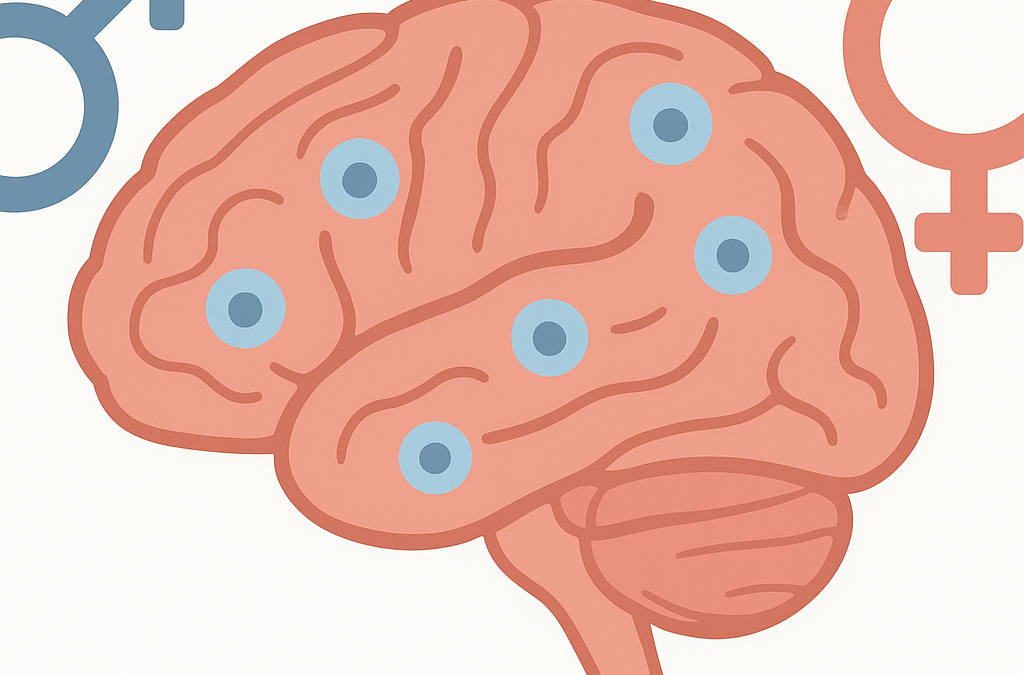
Psilocybin’s primary mechanism involves the serotonin system, specifically the 5-HT2A receptor. When psilocybin is metabolized into psilocin, it binds to these receptors and produces the compound’s characteristic effects. However, the density, distribution, and functional activity of 5-HT2A receptors are not identical between sexes.
According to the Trends in Pharmacological Sciences review, preclinical and human imaging studies have documented differences in serotonin receptor expression across male and female subjects. Some PET imaging research suggests women may have higher 5-HT2A receptor binding potential in certain brain regions, though findings remain inconsistent across studies. These differences could theoretically influence both the intensity and the character of psilocybin’s effects—but until recently, few trials were designed to detect such variation.

Why Have Psilocybin Trials Historically Underrepresented Women?
The psychedelic research field inherited a problem common across pharmacology: clinical trials have historically enrolled more men than women. Early-phase studies often excluded women of childbearing age due to concerns about fetal exposure, creating datasets skewed toward male physiology.
This pattern persisted into modern psilocybin depression studies. A 2020 analysis of psychedelic trial demographics found that women were underrepresented relative to the populations the treatments aimed to serve. Because depression and anxiety disorders disproportionately affect women, this mismatch raises questions about whether published efficacy data fully applies to female patients.
The FDA addressed this gap directly in 2022, issuing updated guidance requiring sponsors to include both sexes in clinical trials and to analyze outcomes by sex as a biological variable. For psilocybin research, this means future trials registered on ClinicalTrials.gov should provide sex-stratified results—data that previous landmark studies often omitted or reported only in supplementary materials.
How Do Hormones Modulate Serotonin Pathways?
Beyond receptor density, hormonal fluctuations add another layer of complexity. Estrogen and progesterone interact with the serotonin system in ways that vary across the menstrual cycle, pregnancy, and menopause. The Trends in Pharmacological Sciences review highlights that these hormonal interactions could modulate psilocybin’s effects in ways not captured by studies that ignore cycle timing or hormonal status.
Estrogen, for instance, has been shown to upregulate serotonin synthesis and receptor expression in preclinical models. If these findings translate to humans, a woman’s response to psilocybin might differ depending on where she is in her menstrual cycle—a variable almost never controlled for in existing trial protocols.

This isn’t purely theoretical. Researchers studying SSRIs—which also target serotonin pathways—have documented sex differences in antidepressant response for decades. Some meta-analyses suggest women respond differently to serotonergic medications than men, though the mechanisms remain debated. Psilocybin research is now grappling with whether similar patterns apply.
What Does This Mean for Ongoing Psilocybin Clinical Trials?
Several Phase 2 and Phase 3 psilocybin trials are currently active, including studies targeting treatment-resistant depression, major depressive disorder, and PTSD. The new FDA guidance means these trials should be collecting sex-stratified data, but whether that data will be analyzed with sufficient granularity to detect pharmacokinetic or pharmacodynamic sex differences remains to be seen.
The review’s authors argue that future trial designs should go further: controlling for menstrual cycle phase, including hormonal assays, and powering studies to detect sex-based effect modifications rather than simply reporting them as exploratory subgroup analyses. Such changes would increase trial complexity and cost, but could prevent the field from approving treatments whose efficacy is actually skewed toward one sex.
Follow our coverage of psilocybin research and policy as these trials report their results over the coming years.
Where Does the Research Go From Here?
The Trends in Pharmacological Sciences review doesn’t claim that psilocybin works differently in men versus women—it argues that we don’t yet have the data to know. Existing trials weren’t designed to answer that question, and post-hoc subgroup analyses lack the statistical power to draw firm conclusions.
What the review does establish is a biological rationale for expecting differences and a regulatory framework (the FDA’s 2022 guidance) that now requires researchers to look. As psilocybin moves closer to potential FDA approval for depression or other indications, understanding whether the treatment works equally well across sexes becomes a practical question with real clinical stakes.
Researchers at institutions including Johns Hopkins and NYU have begun discussing sex-stratified analyses in their recent publications. Whether these will reveal meaningful differences or confirm that psilocybin’s effects are consistent across sexes, the data will be more complete than what came before.
Frequently Asked Questions
Does psilocybin affect men and women differently?
Current evidence is insufficient to draw firm conclusions. Some biological differences in serotonin receptor density and hormonal modulation suggest the potential for variable responses, but existing clinical trials weren’t designed to detect sex-specific effects. Future studies with sex-stratified analyses should provide clearer answers.
Why weren’t earlier psilocybin trials designed to study sex differences?
Historically, early-phase drug trials often excluded women of childbearing age due to concerns about fetal exposure. Additionally, analyzing sex differences requires larger sample sizes and more complex protocols. The FDA’s 2022 guidance now mandates inclusion and analysis by sex as a biological variable.
What is the 5-HT2A receptor and why does it matter?
The 5-HT2A receptor is a serotonin receptor that psilocin (psilocybin’s active metabolite) primarily binds to. Differences in the density or function of this receptor between individuals—including between sexes—could theoretically influence how strongly someone responds to psilocybin.
Is psilocybin legal for clinical use?
Psilocybin remains a Schedule I controlled substance under federal law in the United States. Some states and cities have decriminalized possession or established supervised-use programs (Oregon, Colorado), but decriminalization is not legal sale, and retail availability does not exist. Clinical trials operate under FDA investigational drug exemptions.

Where can I read the original research?
The review discussed in this article was published in Trends in Pharmacological Sciences in August 2025. For current psilocybin trial registrations, ClinicalTrials.gov maintains a searchable database of ongoing studies.
Does this research mean psilocybin should be dosed differently for women?
No dosing recommendations can be drawn from this research. The review identifies gaps in knowledge and argues for better-designed studies—it does not establish that sex-specific dosing is warranted. Any future dosing considerations would require clinical data that doesn’t yet exist.
Read more from the lab notebook for ongoing coverage of psilocybin science and the regulatory landscape.
Disclaimer: This article is for educational and informational purposes only and is not medical, legal, or cultivation advice. Psilocybin is a Schedule I controlled substance under federal law; decriminalization measures do not authorize sale, and this content does not encourage illegal activity. These statements have not been evaluated by the Food and Drug Administration. This content is not intended to diagnose, treat, cure, or prevent any disease.
About the Author
Nick Delesandro — Writer — Mycology & Psychedelic Policy · 20+ years experience
Nick writes about mushroom science and the evolving law and research around psilocybin, reporting from primary sources — clinical trials, agency records, and legislation. His background is in cannabis and horticulture; his mushroom coverage is source-driven reporting, not laboratory or cultivation expertise.