Microdosing psilocybin is getting more popular every year. People everywhere want better focus, less stress, and more energy in daily life. But what does microdosing really mean? Is it safe? How does it work in the brain and body? Let’s break it down into simple steps with answers anyone can use.
What Is Microdosing Psilocybin?
Microdosing means taking small amounts of psilocybin, the natural compound found in “magic mushrooms.” Instead of a full, mind-altering dose, a microdose is so tiny that most people do not notice obvious changes. You won’t “trip” or have strong visuals.
- The usual microdose is about one-tenth to one-twentieth of a normal psychedelic dose.
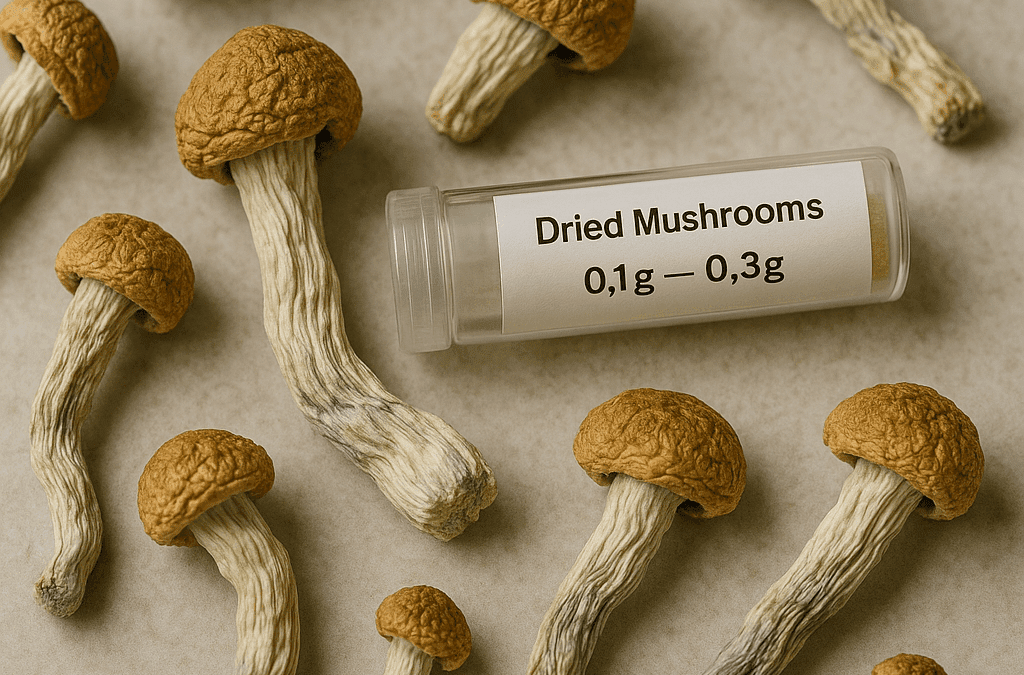
- For most people, that means 0.1 to 0.3 grams (100 to 300 milligrams) of dried Psilocybe cubensis.
- Users grind mushrooms into powder and weigh every dose with a small scale to be precise.
- Most people take their microdose once every few days, not every day.

Why Do People Microdose?
There are many reasons people microdose mushrooms:
- For better mood or happiness
- To think more clearly or boost creativity
- For help with focus or energy
- Some hope it reduces anxiety or symptoms of depression
Remember: Results can vary a lot. Not everyone feels the same way, and science still has a lot to learn.

Microdosing Protocols: How to Start
A protocol is a simple plan that tells people when and how much to take. The two most popular microdosing protocols are:
The Fadiman Protocol
- Take a microdose on Day 1.
- Take no psilocybin on Days 2 and 3.
- Repeat the pattern (dose, two days off) for several weeks.
The Stamets Stack
- Take a microdose for four days in a row.
- Take three days off.
- Many people “stack” lion’s mane mushroom and vitamin B3 for extra benefits.
Why Take Breaks?
Taking days off helps your body reset. It lowers the chance of building a “tolerance,” where the same dose has less effect.
What Does Microdosing Feel Like?
Most people describe these effects:
- Brighter mood or less stress
- Improved focus or less brain fog
- More energy for work or creativity
- A better ability to relate to others
But not everyone notices changes. A few studies show some people feel a benefit, while others do not. Some effects might be due to expectations (placebo effect).
Is Microdosing Psilocybin Safe?
Safety is the most important part of any new practice. Here are key points:
- Psilocybin is not physically addictive. Most people do not become dependent.
- Some people may feel anxious or jittery on their microdose day.
- People with heart or mental health problems should ask a doctor first.
- Too much psilocybin, even by accident, can lead to unpleasant side effects, such as confusion or nausea.
- The most common concern is taking the wrong dose by accident. Always use a digital scale and go slow.
Remember: Psilocybin is still illegal in most places. Always check local laws before starting anything new.

How To Microdose Safely
Here’s a simple checklist for a safe microdosing protocol:
- Use a trusted source for your mushrooms—never forage unless you are an expert.
- Dry mushrooms thoroughly before weighing doses.
- Start low: try 0.1 grams on your first dose.
- Keep a journal to track mood, focus, energy, and any side effects.
- Do not mix with other drugs or alcohol.
- Always pause the protocol for several weeks after a month or two of use.
What Does Science Say About Microdosing?
Recent research offers promising news—but also raises questions:
- One Harvard study found people who microdosed felt less stressed and more creative, but these changes did not always show up on tests.
- A large survey found many people felt happier after microdosing, but a placebo effect may play a part.
- Small studies show some risks for people with mental or heart health problems. Most side effects are mild and go away when stopping.
Bottom Line: Many people enjoy microdosing psilocybin. Most research suggests it is safe forhealthy adults, but more studies are needed.

Expand Your Stash
Curious about growing your own? These trusted brands and resources can help with quality and safety.
- Looking for Clones? Visit www.kingkongclones.com.
- Want Personal Flower? Explore www.packtrapper.com.
- Need Bulk Flower? Check out www.trapgods.io.
- Need Breeder Seeds? Shop www.neptuneseedbank.com.
Always choose licensed, ethical suppliers for all cultivation and supplement needs.
Sources and References
- What Is Microdosing? Here’s Everything You Need to Know – GoodRx
- The Popularity of Microdosing of Psychedelics – Harvard Health
- Psilocybin Microdosing: A Comprehensive 2025 Guide – Daytryp
- A Nine-Step Guide to a Sensible Microdosing Programme – Aeon
- Microdosing Mushrooms: Is It Safe? – EatingWell
- Microdosing with Psilocybin Mushrooms: A Double-Blind Placebo Study – NCBI
- Managing Expectations with Psychedelic Microdosing – Nature
- Mushrooms, Microdosing, and Mental Illness – PubMed