Key Takeaways
- A new paper in the Journal of Psychopharmacology proposes explicit criteria for calling a compound “psychedelic,” aiming to resolve long-standing definitional ambiguity in clinical research.
- The authors argue that receptor pharmacology alone does not determine whether a drug qualifies; subjective experience and dose–response curves matter, too.
- Clearer definitions could shape how regulators evaluate psilocybin clinical trials — and how results are compared across studies.
- Psilocybin remains a Schedule I controlled substance under federal law; definitional debates do not change that status.
When researchers report that “a psychedelic” reduced depression scores, they rarely pause to explain what makes the drug psychedelic in the first place. That silence creates problems. Ketamine acts on different receptors than psilocybin; MDMA has entactogenic effects some scientists call distinct from classic hallucinogens. Yet headlines lump them together, and regulators sometimes struggle to compare trial data because the category itself is under-defined. A paper published in August 2025 in the Journal of Psychopharmacology tackles the question directly, proposing operational criteria the field could adopt. Here is what the authors argue, what the primary record says, and why definitional precision matters for anyone tracking psilocybin research.
What Does the New Paper Actually Propose?
The authors offer three interlocking criteria: (1) primary agonism at the serotonin 5-HT2A receptor, (2) dose-dependent induction of characteristic subjective effects including perceptual changes and altered sense of self, and (3) a safety and tolerance profile consistent with classic hallucinogens. Together, these benchmarks aim to distinguish compounds like psilocybin, LSD, and DMT from drugs that share some pharmacology but not the full experiential signature.
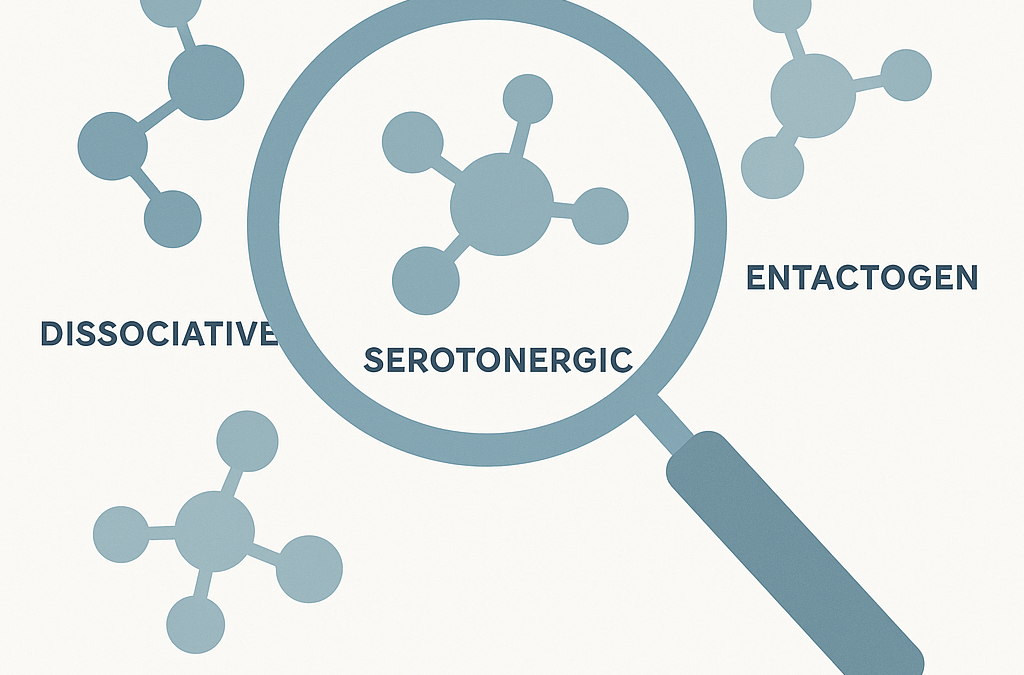
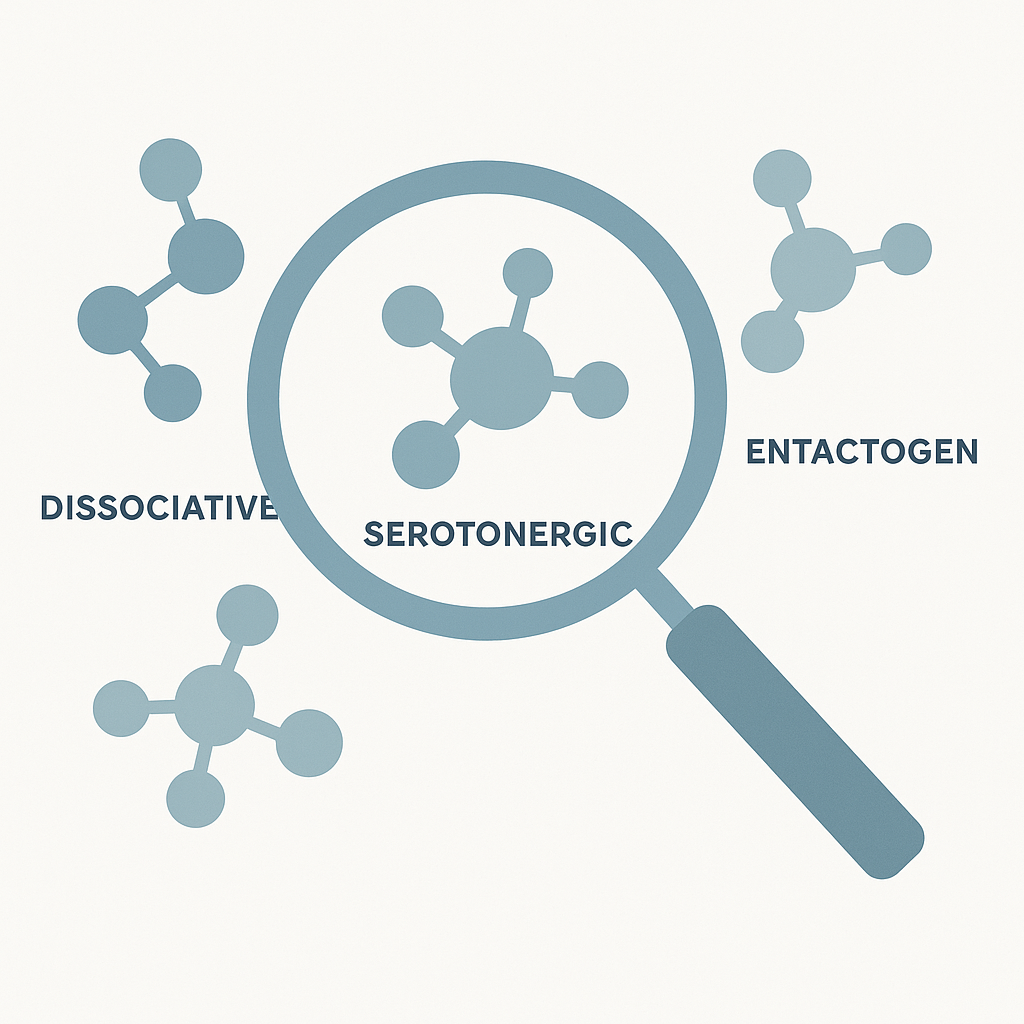
Receptor binding is necessary but not sufficient, the paper argues. Lisuride, for example, activates 5-HT2A yet does not produce the perceptual effects users and researchers associate with a psychedelic experience. Conversely, ketamine — often grouped with psychedelics in popular coverage — acts primarily on NMDA receptors and produces dissociative, not classically psychedelic, phenomenology. By requiring all three criteria, the framework excludes edge cases that have muddied comparative research.
The full paper is available on PubMed for readers who want the pharmacological detail. What matters for policy and trial design is the practical upshot: researchers could cite a shared definition rather than reinventing terminology study by study.
Why Definitional Ambiguity Complicates Psilocybin Clinical Trials
When the FDA reviews psilocybin depression study data, it compares outcomes across trials that may have used different inclusion criteria, dosing schedules, and even different understandings of what counts as the investigational drug’s class. If one trial defines its intervention as “psychedelic-assisted therapy” and another calls it “serotonergic hallucinogen therapy,” meta-analyses become harder to interpret.
Breakthrough-therapy designations — psilocybin has received two, for treatment-resistant depression and major depressive disorder — rest on preliminary evidence that the drug “may demonstrate substantial improvement.” Regulators weighing that evidence need to know whether comparator studies are examining the same phenomenon. The new paper does not resolve every ambiguity, but it offers a starting framework for standardised terminology.

How Does This Affect Legal Classification?
It does not — at least not directly. Psilocybin remains a Schedule I controlled substance under the federal Controlled Substances Act, meaning the government considers it to have high abuse potential and no accepted medical use. Definitional debates in pharmacology journals do not change scheduling decisions, which require separate regulatory action through the DEA or congressional legislation.
That said, a clearer scientific consensus on what “psychedelic” means could inform future scheduling petitions. Advocates have long argued that psilocybin’s safety and efficacy data warrant reclassification. Opponents counter that the subjective effects themselves pose risks. A shared vocabulary would at least ensure both sides are debating the same substance class.
State-level developments proceed independently. Oregon’s supervised-use programme and Colorado’s regulated-access framework apply to psilocybin specifically, defined by chemical identity rather than by a broader “psychedelic” umbrella. Researchers tracking Oregon’s programme or Colorado’s rollout will notice that legislation names the compound, not the category.
What the Paper Does Not Settle
Several questions remain open. First, subjective experience is inherently difficult to quantify; the paper relies on validated scales like the 5D-ASC and MEQ-30 but acknowledges these instruments were developed for research, not regulatory gatekeeping. Second, the framework does not address novel compounds designed to retain therapeutic effects while minimising perceptual changes — so-called “non-hallucinogenic psychedelics” in early-stage trials. Whether those drugs meet criterion two is an empirical question the field has not yet answered.
Third, the authors note that cultural and set-and-setting variables influence subjective reports. A compound might produce perceptual changes in one context but not another. The definition is thus probabilistic, not absolute.

Why This Matters for Readers Following Psilocybin Research
If you track psilocybin clinical trials — whether for professional, academic, or personal reasons — definitional clarity helps you read studies more critically. When a trial reports that “psychedelic-assisted therapy outperformed placebo,” you can now ask: did the investigators use criteria like those proposed here, or did they rely on an unstated folk definition? Precision matters because it determines whether results generalise.
For readers interested in the broader landscape of research and policy coverage, follow our reporting on mycology science as new papers and trial results emerge. The field moves quickly, and terminology debates may seem abstract until they shape the data you are trying to interpret.
Frequently Asked Questions
What makes a drug “psychedelic” according to the new paper?
The authors propose three criteria: primary agonism at the serotonin 5-HT2A receptor, dose-dependent subjective effects including perceptual changes and altered sense of self, and a safety-tolerance profile consistent with classic hallucinogens. All three must be present.
Is ketamine considered a psychedelic under this framework?
No. Ketamine acts primarily on NMDA receptors and produces dissociative rather than classically psychedelic phenomenology. The paper’s criteria would exclude it from the psychedelic category, even though popular coverage often groups them together.
Does this definition change psilocybin’s legal status?
It does not. Psilocybin remains Schedule I under federal law. Definitional debates in scientific literature do not alter scheduling, which requires separate regulatory or legislative action.
Why does the definition matter for clinical trials?
Standardised terminology helps researchers and regulators compare data across studies. Without a shared definition, meta-analyses and FDA reviews face ambiguity about whether trials are examining the same drug class.
Are “non-hallucinogenic psychedelics” covered by this framework?
Not clearly. Novel compounds designed to retain therapeutic effects while minimising perceptual changes may not meet the subjective-experience criterion. The paper acknowledges this as an open empirical question.
Where can I read the full paper?
The paper is available on PubMed under the August 2025 issue of the Journal of Psychopharmacology. A direct link appears earlier in this article.
This article is for educational and informational purposes only and is not medical, legal, or cultivation advice. Psilocybin is a Schedule I controlled substance under federal law; decriminalization measures do not authorize sale, and this content does not encourage illegal activity.
These statements have not been evaluated by the Food and Drug Administration. This content is not intended to diagnose, treat, cure, or prevent any disease.
About the Author
Nick Delesandro — Writer — Mycology & Psychedelic Policy · 20+ years experience
Nick writes about mushroom science and the evolving law and research around psilocybin, reporting from primary sources — clinical trials, agency records, and legislation. His background is in cannabis and horticulture; his mushroom coverage is source-driven reporting, not laboratory or cultivation expertise.