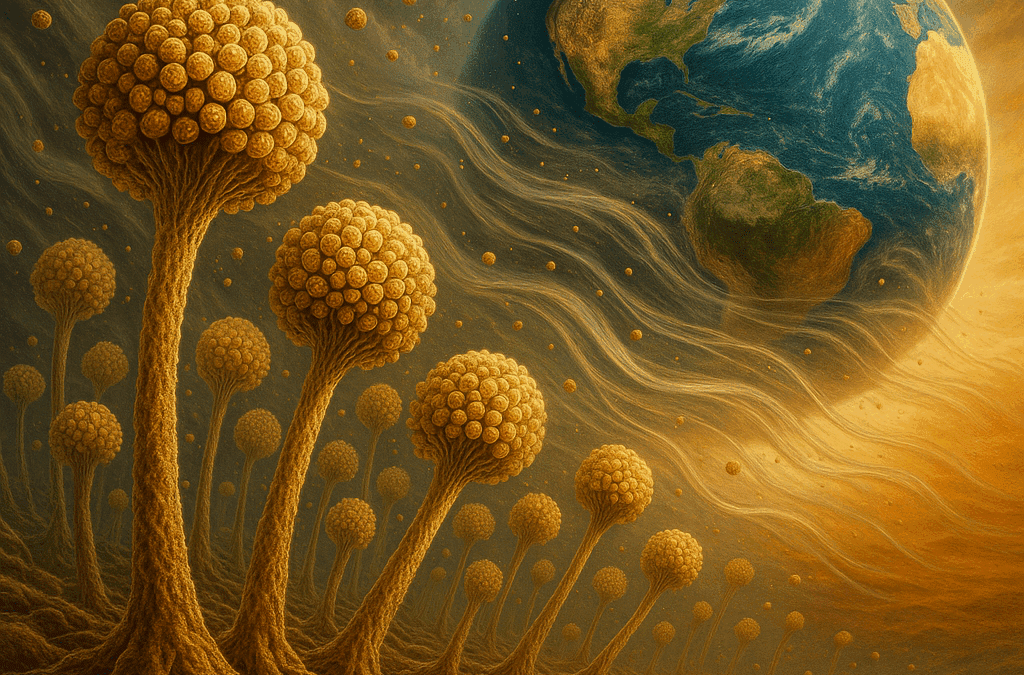
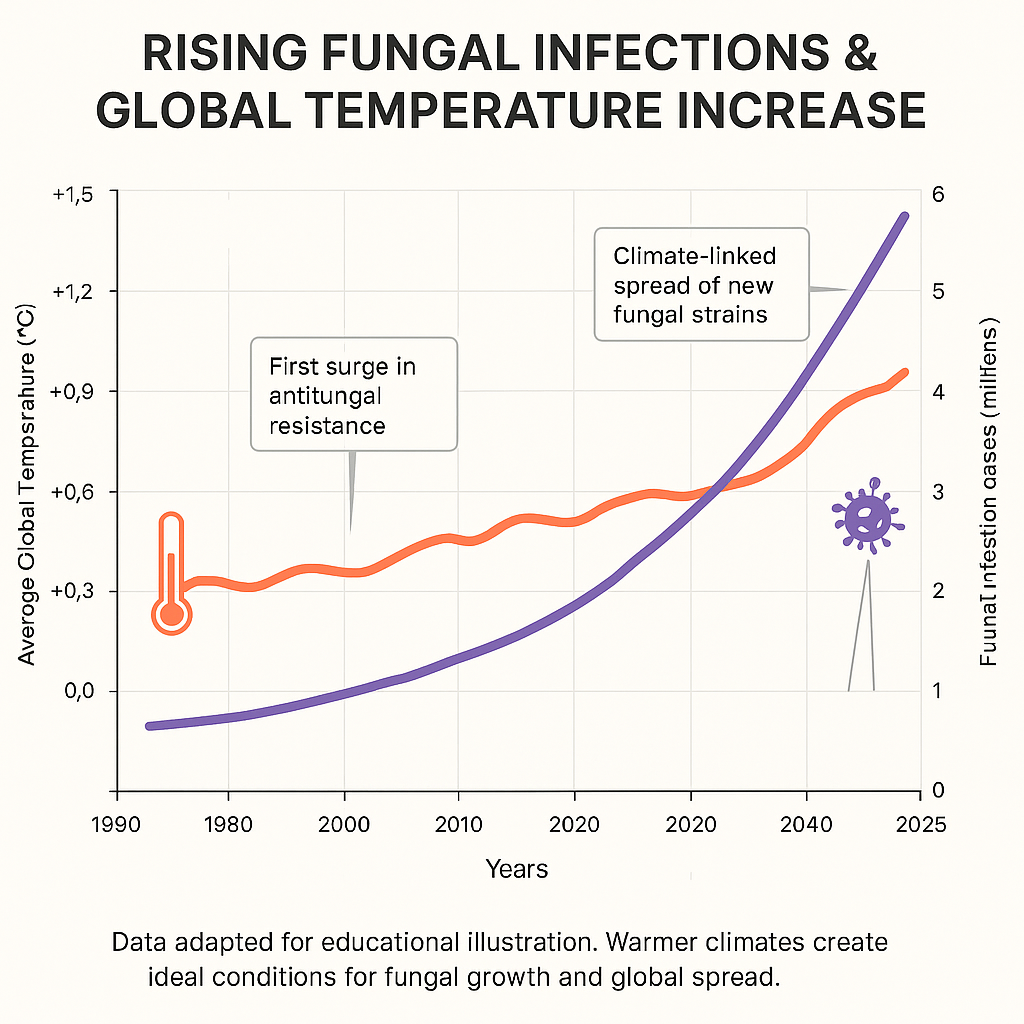
Climate change and pathogenic fungi are connected in new ways. As the planet warms, more fungi are making people and plants sick. Some fungi are new. Some were once harmless but now survive heat—and cause infection. Scientists worry these trends will continue. Everyone should know how and why this matters.
What Are Pathogenic Fungi?
- Fungi are tiny living things, like mushrooms, mold, and yeast.
- Pathogenic means “disease-causing.” Most fungi do not harm people or animals.
- Some change and adapt to warmer temperatures or new places.
- These “adapted” fungi can cause new illnesses.

How Does Climate Change Affect Fungi?
Climate change means more heat, more storms, and wild weather.
- Some fungi now survive in places too cool for them before.
- Heat helps some fungi live at higher body temperatures, so they infect people and animals.
- Floods, fires, and hurricanes spread spores (spores = tiny seeds of fungi).
- More spores = higher chance of disease.
Example:
- Valley Fever (caused by Coccidioides fungus) used to be found only in the southwest U.S.
- It is now found in new states and even in Canada.
- Drought and wind help spores travel far.
The Rise of Dangerous Fungi
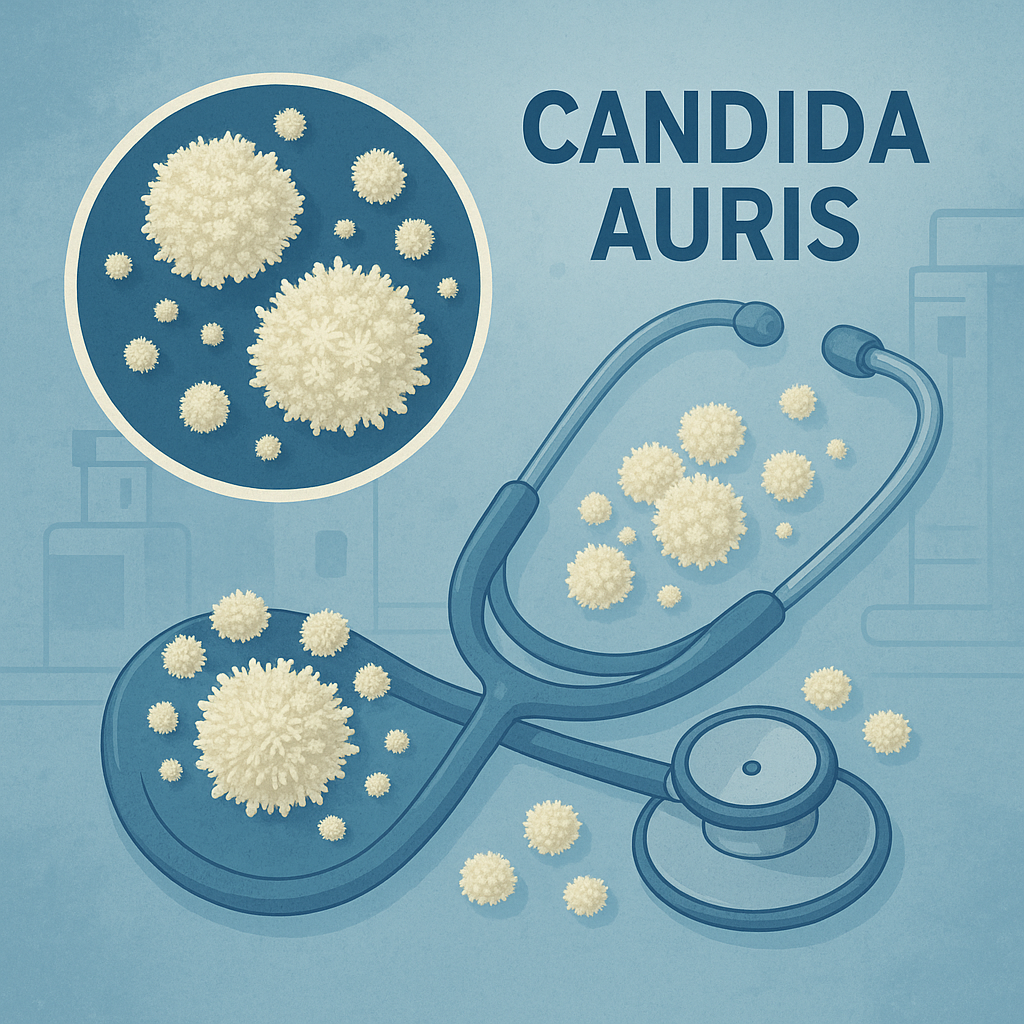
Some fungi, like Candida auris and Aspergillus, are now superbugs. Superbugs are germs that drugs cannot easily kill.
Candida auris:
- Appeared in hospitals worldwide in the last 10 years.
- Hard to remove from surfaces.
- Some infections do not respond to most medicines.
Aspergillus:
- Live in soil and on plants.
- Cause lung infections, especially in sick people.
- More cases appear after weather disasters.
Crop Threats:
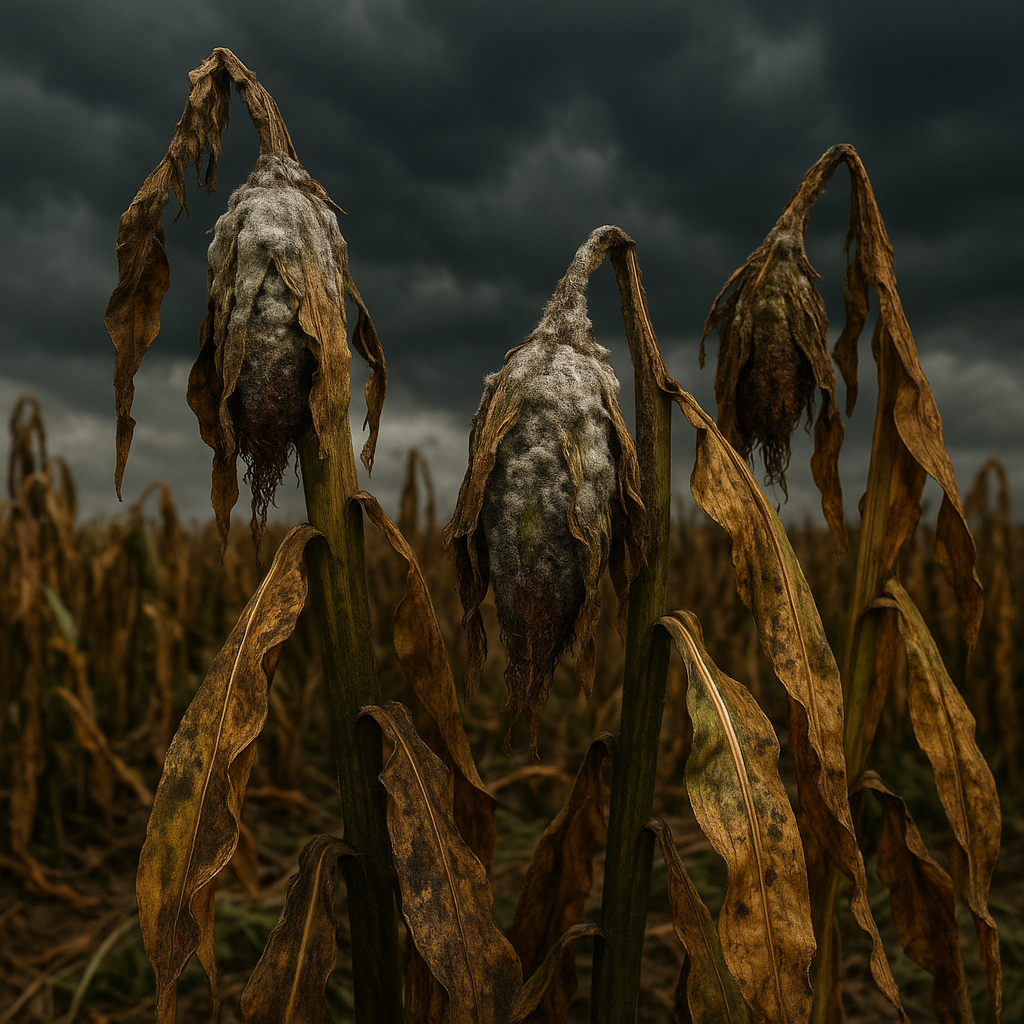
- Fungi destroy up to a third of some harvests.
- Wheat, corn, and nuts can all rot from mold.
- Moldy crops may become toxic to people and animals.
Why Are These Fungi Becoming Hard to Treat?
- Only a few types of antifungal drugs exist.
- Some fungi have developed resistance, which means drugs do not work as well.
- Using the same drugs in farming and medicine makes this worse.
- No vaccines for fungal infections exist yet.
Who Gets Sick?
- People with weaker immune systems (cancer, HIV, older adults, babies).
- People living in crowded or wet places after storms.
- Farmers and food workers.
How to Protect Yourself
- Clean wounds quickly, especially after disasters or working with soil/plants.
- Avoid breathing dust after floods or wildfires—wear a mask if you have one.
- Store food in dry, clean places to stop mold.
- Hospitals should clean equipment and floors often.
- Farmers need to use antifungal drugs only when needed.
What Are Experts Doing?
Scientists and doctors are studying ways to:
- Make new antifungal medicines.
- Develop fast tests to spot fungal infections.
- Teach people how to clean water, air, and surfaces after storms.
- Study how fungi move as the climate changes.
Good Fungi: Not All Are Bad
- Some fungi help plants grow by sharing nutrients.
- Others clean up waste and keep soils healthy.
- Many medicines come from fungi, like penicillin.
- Learning about fungi gives hope for future cures and greener farms.
FAQs
Q: Can you see fungal spores?
No. Spores are very small. You need a microscope.
Q: Why do crops rot after storms?
Rain and flooding help fungi grow. Warm, wet weather speeds up rot.
Q: Is there a cure for all fungal infections?
No. Some are hard or impossible to treat. Prevention and fast treatment are best.
Q: Who should worry most?
People with weak immune systems, people after disasters, and people working with crops or soil.
Internal Links
- Explore how fungi survive climate change: mycological.co/climate-fungi
- Learn prevention tips: mycological.co/fungal-infection-prevention
- Dive into medical mycology: mycological.co/medical-fungi
External Links
Expand Your Stash
- Looking for Clones? Secure healthy starters at kingkongclones.com—great for growers and research.
- Need Personal Flower? Shop curated flowers at packtrapper.com—quality delivered fresh.
- Want Bulk Flower? Order in volume with trapgods.io—top suppliers, top prices.
- Need Breeder Seeds? Discover top genetic lines at neptuneseedbank.com—perfect for the next harvest.